

Motor Controllers for OEM Machines
A motor controller is an electronic device that controls and regulates an electric motor based on the requirements of the application. It is used to control, for example, speed, torque, position and acceleration.
In OEM machines and industrial systems, the motor controller often communicates with higher-level control systems via standardised protocols such as CAN, Modbus, EtherCAT or other industrial fieldbuses.
Read more
The motor controller is a central part of modern motion systems. Choosing the right motor controller is therefore not only about making the motor rotate. It is about achieving precise movement, low energy consumption, safe operation and stable performance throughout the machine’s service life.
By regulating voltage and current, the motor controller directly affects the motor’s speed, torque and dynamics. This is crucial in applications such as automated production lines, robotic systems, conveyors, pumps, fans, spindles and customized industrial equipment.
Why Motor Control is Important
The motor controller converts commands from, for example, a PC, PLC or other control system into controlled and precise motor movements.
With the right motor controller, you can optimize both machine performance and energy use. This provides better process control, reduced wear and higher operational reliability.
Benefits of the Right Motor Controller
- Speed and torque control
For example, for conveyors, pumps, fans, wheel drives and spindles. - Precise movements and positioning
Servo and stepper motor drives enable exact positioning, synchronized axes and repeatable movements. - Higher energy efficiency
Demand-based speed control reduces energy consumption and optimizes the process. - Reduced wear and longer service life
Smoother starting, stopping and control reduce mechanical stress on the machine. - Protection and safety
Functions such as motor protection, overload protection and integration with PLC or safety systems contribute to safe and stable operation. - Easy integration into OEM systems
Communication via established protocols makes it easier to integrate the motor controller into new or existing machine designs.
Types of Motor Controllers
The choice of motor controller depends on motor type, application, power requirements, communication and precision requirements. Common solutions include:
- Inverters/converters, VFD, for AC motors
Control AC motors by regulating frequency and voltage. Suitable for pumps, fans, conveyors and industrial machines where energy-efficient speed control is required. - Servo drives
For applications with high requirements for precision, fast response and exact control of position, speed and torque, for example in robotics, CNC and packaging machines. - DC motor controllers
Suitable for applications with specific torque requirements or where DC technology is already established. - Integrated motor and drive units
A compact solution where the motor and controller are integrated, saving space and simplifying cabling.
Choose the Right Motor Controller for Your Application
Motor controllers and inverters are essential components in modern machine design. The right choice provides precise movement, optimized energy use, high operational reliability and smooth integration with the machine’s control system.
Whether you need a frequency converter for an AC motor, a servo drive for exact positioning or a compact integrated motor solution, we can help you find the right drive technology for your application.
Need Help Choosing the Right Motor Controller or Inverter?
Contact our team and we will review your technical requirements, your application and which motor controller or inverter is best suited for your machine.
| Motor Types: | Induction AC, Synchronous AC, Brushless DC |
| Communication: | CANopen or J1939 |
| System Voltage: | 24-96 V |
| Feedback Types: | Incremental, sinusoidal, six-step |
| Motor Types: | Induction AC, synchronous AC, brushless DC |
| Communication: | CANopen and/or J1939 |
| System Voltage: | 350 V/650 V |
| Feedback Types: | Resolver or incremental encoder/analog (sin-cos) |
| Motor Types: | Induction AC, Synchronous AC, Brushless DC |
| Communication: | CANopen |
| System Voltage: | 24-80 V |
| Feedback Types: | Dual incremental encoder, analog sin-cos, UWV (6-step) |
| Communication: | CANopen or J1939 |
| Control mode: | Voltage or current |
| System voltage: | 270-800 V |
| I/O logic connector: | MCP connector (21 pins) |
| Communication: | CANopen or J1939 |
| Control mode: | Voltage or current |
| System voltage: | 250-900 V |
| I/O logic connector: | TE HDSCS |
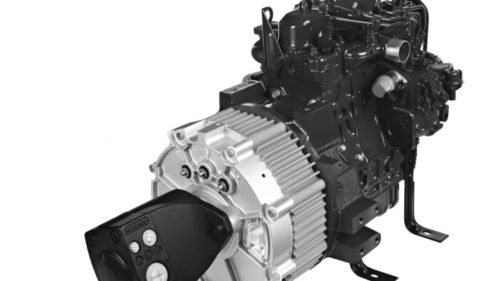
Generator Solutions for 24-80V Hybrid Vehicles
Machine builders today need to explore alternatives to traditional powertrains for several reasons. In many machines that currently use combustion engines, new requirements from legislators and users are becoming increasingly difficult to meet without significant adaptations.